
Choosing the right wine refrigerator is crucial for preserving your collection’s integrity and flavor. This article explores the essential features of modern wine coolers, focusing on dual-zone technology, vibration reduction, and smart design, using the TITTLA 15-inch model as a benchmark. We’ll integrate expert insights to guide your investment in perfect wine storage.
The Science of Dual-Zone Temperature Control
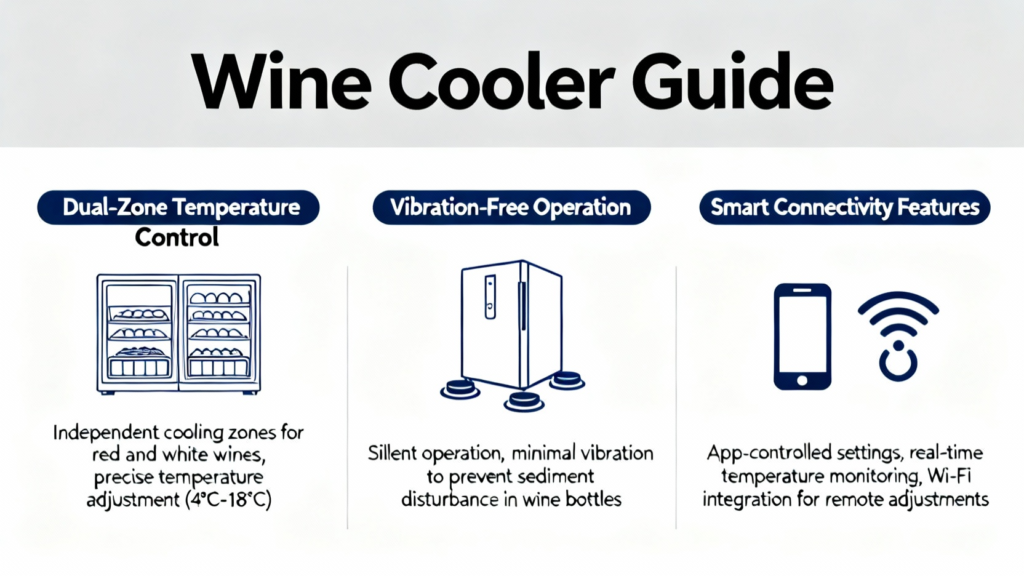
Not all wines are meant to be stored at the same temperature. Red wines typically benefit from slightly warmer storage (around 55-65°F) to allow their complex flavors to develop, while whites, rosés, and sparkling wines require cooler temperatures (around 45-50°F) to preserve their freshness and acidity. A dual-zone wine cooler like the TITTLA model addresses this precisely, offering independent climate zones. This design is rooted in the traditional conditions of wine cellars, which maintain stable, varied temperatures. As noted on Wikipedia, consistent temperature is one of the most critical factors in wine storage, as fluctuations can cause expansion and contraction, leading to oxidation and spoilage. The ability to set one zone at 41-56°F and another at 56-65°F provides the versatility needed for any enthusiast’s collection.
Preservation Engineering: Vibration, Light, and Humidity
Beyond temperature, several other factors can prematurely age wine. Vibration from compressors can disturb the sediment in bottles and potentially accelerate chemical reactions. Advanced units utilize compressor isolation and stabilized cabinet feet, like the TITTLA’s adjustable feet, to minimize this. Ultraviolet (UV) light is another enemy, as it can degrade and prematurely age wine. Double-paned, tinted glass doors are essential for protection, a feature highlighted in user discussions on Reddit about essential cooler features. Furthermore, maintaining proper humidity (generally 50-70%) keeps corks from drying out. While some coolers have dedicated humidification systems, a well-sealed thermopane door helps maintain a stable internal environment. A Reddit user in a January 2023 thread on long-term storage emphasized the importance of a “dark, vibration-free, and consistently cool environment” above all else, validating these design priorities.
Smart Features for Modern Convenience
Today’s wine refrigerators integrate intelligent features for ease of use and peace of mind. Digital touch controls and LED displays offer precise management, while functions like temperature memory ensure settings are retained after a power interruption—safeguarding your collection. Interior LED lighting, often with auto-shutoff timers, allows for viewing without generating heat. Security is also a consideration for valuable collections, with some models including lockable doors. For the tech-savvy collector, these features move storage beyond mere function into the realm of integrated home management. The inclusion of a built-in air filter, as seen in the TITTLA, is a nuanced touch that purifies internal air, preventing musty odors from tainting the wine’s delicate bouquet, a point often overlooked in entry-level models.
Installation and Integration in Your Home
The final consideration is how the unit fits your space and lifestyle. Under-counter or built-in models, like this 15-inch under counter wine cooler, are designed for seamless integration into kitchen cabinetry or bar areas, offering a built-in look with front-venting ventilation. Freestanding units offer more placement flexibility. Capacity, measured in standard Bordeaux bottles, is key; a 30-bottle capacity suits growing collections. Adjustable shelving is vital for accommodating different bottle shapes, from Champagne to Burgundy. As emphasized in the product notice, allowing the unit to stand upright for 24 hours after delivery before plugging it in is critical. This lets the compressor oil settle, preventing immediate damage—a standard but essential step for appliance longevity.
In conclusion, selecting a wine refrigerator requires careful analysis of features that directly impact preservation. As we’ve explored, dual-zone temperature control is fundamental for diverse collections, while advanced engineering to mitigate vibration and UV light protects wine at a chemical level. Smart features like temperature memory and clean air filtration add layers of reliability and convenience. When integrated into your home, whether as a built-in or freestanding unit, the right cooler acts as a functional centerpiece. Supported by insights from authoritative sources on proper wine storage and community-driven feedback from platforms like Reddit, it’s clear that a model combining these technologies—such as the highlighted TITTLA—offers a comprehensive solution. Ultimately, a quality wine refrigerator is an investment that safeguards the character, taste, and value of your wine, ensuring every bottle is served as intended.
I was just looking into dual-zone coolers, so this guide’s focus on vibration-free operation and smart features is perfectly timed for my search.
\}}
I’ve been considering a dual-zone cooler for my reds and whites, so this guide was really helpful!
\}}
I’ve been considering a dual-zone cooler for my reds and whites, so this guide was really helpful!
\}}
I’ve been considering a dual-zone cooler, and this guide really helped clarify why vibration-free operation is so important for my collection.
\}}
I’ve been considering a dual-zone cooler, and this guide really helped clarify why vibration-free operation is so important for my collection.
\}}
I’ve been considering a dual-zone cooler, and this guide really helped clarify why vibration-free operation is so important for my collection.
\}}