
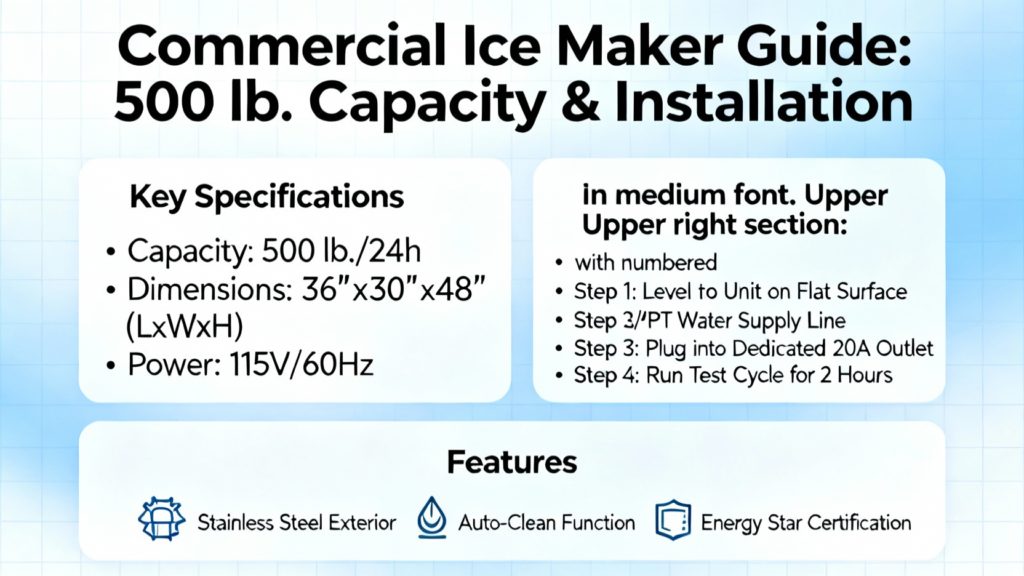
For restaurants, bars, and hotels, a reliable ice maker is a backbone of daily operations. This guide delves into the critical specifications and installation requirements of a heavy-duty 500 lb./24h capacity commercial ice maker. We’ll explore its durable construction, essential setup for optimal performance, and vital safety protocols to ensure longevity and safe operation in your business.
Engineering for Endurance: Stainless Steel and Eco-Conscious Design
At the core of this unit is its durable stainless steel construction, a material chosen for its exceptional resistance to corrosion, ease of cleaning, and ability to withstand the rigorous demands of a commercial kitchen environment. This aligns with industry standards where stainless steel is preferred for food service equipment due to its hygienic properties. The machine utilizes environmentally friendly R290 refrigerant (propane), a hydrocarbon with a very low Global Warming Potential (GWP). As noted on Wikipedia, natural refrigerants like R290 are gaining prominence due to environmental regulations phasing out high-GWP synthetics, though they require careful handling due to flammability. Its compatibility with climate types SN, N, ST ensures reliable performance across varied ambient temperatures common in North American commercial settings.
Power, Placement, and Prerequisites for Installation
Proper installation is non-negotiable for performance and safety. This ice maker is designed for standard 110V 60Hz operation with a 780W draw, common in US commercial spaces. Critical placement rules include maintaining at least 5.9 inches of clearance on all sides for airflow and keeping it away from heat sources. It requires a direct connection to a drinking water supply with a pressure between 14.5-58 psi; outside this range, a pressure changeover valve is mandatory. Furthermore, a gravity-fed drain line must be installed, with its outlet lower than the machine’s, to handle wastewater discharge effectively. As emphasized in a Reddit discussion from February 2023, improper ventilation and drainage are among the top causes of ice machine failure in restaurants.
Critical Safety and Initial Startup Protocols
Adhering to safety guidelines protects your investment and premises. The unit features a three-prong plug and a 70-inch cord; using an extension cord is strongly discouraged as it can overheat. It must be kept from flammable materials and is not recommended for outdoor use. A crucial, often overlooked step is the 24-hour settling period after delivery. The unit must remain upright to allow the refrigerant and oils to settle, preventing compressor damage—a point frequently stressed by equipment technicians. For initial use, allowing an additional hour before plugging it in ensures system stability. Only potable water should be used, as other liquids can damage the internal components and create health hazards.
Optimizing Performance and Long-Term Operation
Once installed, understanding operational nuances maximizes output. The surrounding environmental temperature directly influences ice production time; hotter ambient air will reduce efficiency. Regular cleaning and maintenance are imperative to prevent scale buildup and bacterial growth, issues well-documented in food safety guidelines. The ice stored in the inner bin will naturally melt, so consistent drainage is key. For high-volume needs, consider a model like the 23.2 in. 500 lbs./24h Capacity Commercial Stainless Steel Ice Maker, which is built for such demand. The principle of gravity drainage for wastewater, as used in this unit, is a standard and reliable method in commercial ice makers, ensuring simple and effective water disposal.
In summary, integrating a heavy-duty commercial ice maker into your operation requires careful attention to its technical specifications and installation requirements. From its robust stainless-steel build and eco-friendly R290 refrigerant to the non-negotiable need for proper water pressure, drainage, and ventilation, each factor plays a pivotal role in ensuring reliable service. The mandatory 24-hour settling period and strict electrical safety protocols, including avoiding extension cords, are essential for preventing premature failure and hazards. As highlighted by industry discussions, neglecting these steps is a common precursor to downtime. Ultimately, the performance of even a capable commercial stainless steel ice maker is contingent on its operating environment and adherence to maintenance schedules. By following these detailed guidelines, you can secure a consistent ice supply, ensuring your business runs smoothly and safely while maximizing the return on your equipment investment.
This guide is super helpful for understanding the installation needs of a 500 lb. capacity commercial ice maker.
\}}
This guide is super helpful for understanding the installation needs of a 500 lb. capacity commercial ice maker.
\}}
This guide is super helpful for understanding the installation needs of a 500 lb. capacity commercial ice maker.
\}}
This guide really highlights why a reliable 500 lb. commercial ice maker is such a backbone for busy operations like ours.
\}}